
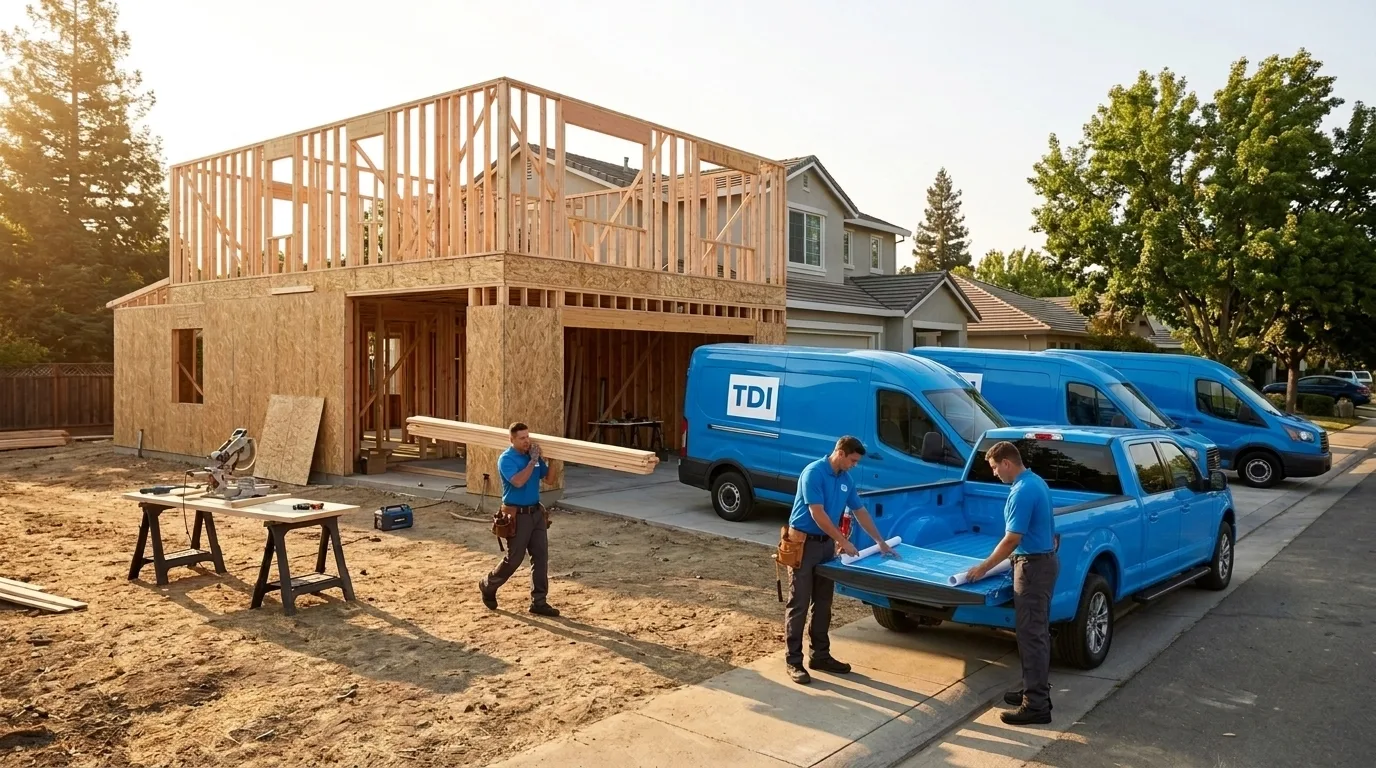
TL;DR: Fire and smoke restoration is the work of removing soot, neutralizing smoke odor, and rebuilding the structure and finishes damaged by a fire. It moves through four general phases: emergency board-up and mitigation, soot and odor remediation, structural drying if firefighting water was used, and the physical rebuild of framing, drywall, flooring, and paint. A contained single-room fire might wrap up in a few weeks. A fire that reaches the attic or spreads through shared walls in an older Sacramento home can take several months, mostly because the rebuild side takes longer than the cleanup side.
If you’re standing in a boarded-up house in East Sacramento or Land Park a few days after a kitchen or electrical fire, the cleanup crew has probably already come and gone, and you’re left wondering who actually puts the house back together. That’s the part most people don’t know to ask about until they’re in it: fire damage cleanup and fire damage rebuilding are often two different companies, two different contracts, and two different timelines, unless you hire a contractor who does both.
What does fire and smoke restoration actually include?
Fire and smoke restoration covers the full arc from emergency stabilization through a finished, livable structure, not just soot removal. A company that only does the cleanup side will dry out the house, wipe down smoke residue, and hand you back a shell with exposed studs and a punch list for someone else to finish.
The cleanup phase typically includes board-up of broken windows and damaged roof sections, HEPA vacuuming of soot from surfaces, thermal fogging or hydroxyl treatment to break down embedded smoke odor, and content cleaning for salvageable furniture and belongings. The rebuild phase is construction work: framing replacement where studs or joists were charred, new drywall and insulation, electrical and plumbing repairs where wiring or pipes were compromised by heat, flooring, and paint. In Sacramento’s older craftsman and bungalow stock, fire crews also commonly find knob-and-tube wiring or undersized electrical panels that need to be brought up to current code during the rebuild, which the International Code Council publishes standards for through the adopted California Building Code.
Smoke damage is also broader than people expect. A kitchen fire contained to one room can still leave soot and odor throughout the HVAC system, and in Sacramento’s wildfire smoke seasons, homes miles from any flame sometimes need interior smoke remediation after heavy smoke infiltration through attic vents and return air ducts.
How does the fire and smoke restoration process actually work, step by step?
The process runs in a set order because each step depends on the one before it: stabilize the structure first, document the damage for insurance, remove what can’t be saved, then rebuild. Skipping or reordering these steps is where most delays and insurance disputes start.
- Emergency mitigation (24-48 hours). Boarding broken windows, tarping roof damage, and shutting off compromised utilities to stop further damage from weather or looting.
- Damage assessment and insurance scope. A contractor walks the property with the adjuster or documents damage independently so the repair scope matches what actually happened, not a generic estimate.
- Soot and debris removal. Non-salvageable drywall, insulation, and charred framing come out. Salvageable surfaces get deep-cleaned with HEPA and chemical sponges before any odor treatment.
- Odor neutralization. Thermal fogging, ozone treatment, or hydroxyl generators break down smoke particles trapped in porous materials like wood and drywall, rather than masking the smell.
- Structural drying. If firefighting hoses soaked the structure, this step runs in parallel with cleanup, similar to a water damage restoration job.
- Rebuild. New framing, electrical, drywall, insulation, flooring, cabinetry, and paint, built back to current code.
- Final walkthrough. Confirming the scope matches the insurance settlement and the finished space passes inspection.
A single-room kitchen fire with no structural spread can often finish mitigation in under a week and rebuild in three to six weeks. A fire that travels into the attic, through an exterior wall, or into a second story usually runs two to four months once permitting and structural engineering review are factored in.
What mistakes do homeowners make after a fire?
The most common and costly mistake is hiring the cleanup crew and the rebuild contractor separately, which creates gaps where nobody owns the full scope. When the mitigation company’s job ends at drying and deodorizing, you’re left finding a general contractor on your own, resubmitting documentation to insurance, and waiting through a second intake process while the house sits exposed.
A few other patterns show up repeatedly on Sacramento fire claims:
- Cleaning soot with household products before documentation. Wiping down walls with all-purpose cleaner before photos are taken can drive soot deeper into porous surfaces and weaken your insurance documentation.
- Waiting to board up. An unsecured structure after a fire is exposed to weather, which adds water damage and sometimes mold on top of the fire claim.
- Not getting a written scope before demolition starts. Verbal agreements about what gets replaced versus repaired lead to disputes once drywall is already down.
- Assuming smoke odor is gone once it’s no longer strong. Odor that fades can return once the house heats up in summer if the source material wasn’t actually treated or removed.
Who handles the rebuild, and when should I call them?
Call a licensed general contractor who handles both the restoration and construction side as soon as the fire department releases the property, ideally before any cleanup begins. Bringing one company in from board-up through final paint keeps the insurance scope consistent and avoids the handoff gap between cleanup and rebuild.
TDI Builders has handled fire and smoke rebuilds in the Sacramento region since 1983, and works insurance claims direct rather than requiring homeowners to manage two separate contracts. If your home or commercial property in Sacramento, Roseville, Elk Grove, or the surrounding area has fire or smoke damage, request a damage assessment before you sign with a cleanup-only crew.
If you’re still early in the insurance process, our storm damage insurance claim checklist covers documentation steps that apply to fire claims too, and our breakdown of the best fire damage restoration options in Sacramento walks through how to compare contractors for this specific type of job.
A fire is disorienting enough without also managing two contractors and two timelines. The fastest, least stressful path back into the house is one company that documents the damage, stabilizes the structure, and rebuilds it to code, with one point of contact the entire way.
About TDI Builders
TDI Builders is a licensed and insured construction and restoration company serving Sacramento, Manteca, and Modesto, California, with more than 40 years of construction and rebuilding experience since 1983. The company handles commercial, industrial, and residential projects, including fire and smoke damage rebuilding, and works insurance rebuilds direct rather than through a third-party adjuster process. Call TDI Builders at (877) 688-0866 to schedule a fire damage assessment.