
TL;DR: The best home addition contractor in Sacramento holds a CSLB Class B license, can show a portfolio of completed additions (not just remodels), handles permits directly with the City of Sacramento or Sacramento County depending on where your lot sits, has structural engineering in-house or through a regular partner, and puts your schedule and payment schedule in writing before any demolition starts. Vet every bid against those five points, not just the total price.
If you own a 1950s ranch in Arden-Arcade or Land Park and you’re trying to add a primary suite or push the kitchen out another 200 square feet, you’ve probably noticed the bids you’re getting back don’t look alike. One contractor quotes a number that seems too good to be true. Another spends twenty minutes on the phone asking about your lot’s setback lines before ever mentioning a price. That second conversation is usually the better sign, and here’s exactly what separates a contractor who can actually deliver a tied-in addition from one who’s guessing.
What license does a home addition contractor need in Sacramento?
A contractor building a room addition in California needs an active CSLB Class B (General Building) license, because the work touches multiple trades: framing, electrical, plumbing, and often structural tie-ins to the existing house. A Class B license is the baseline that lets a single contractor manage the whole scope instead of you hiring and coordinating five separate specialty license holders yourself.
You can verify any license number in about thirty seconds on the CSLB’s consumer site, which also shows bond status and any disciplinary history. Do this before you sign anything, not after. A contractor who hesitates when you ask for their license number is telling you something.
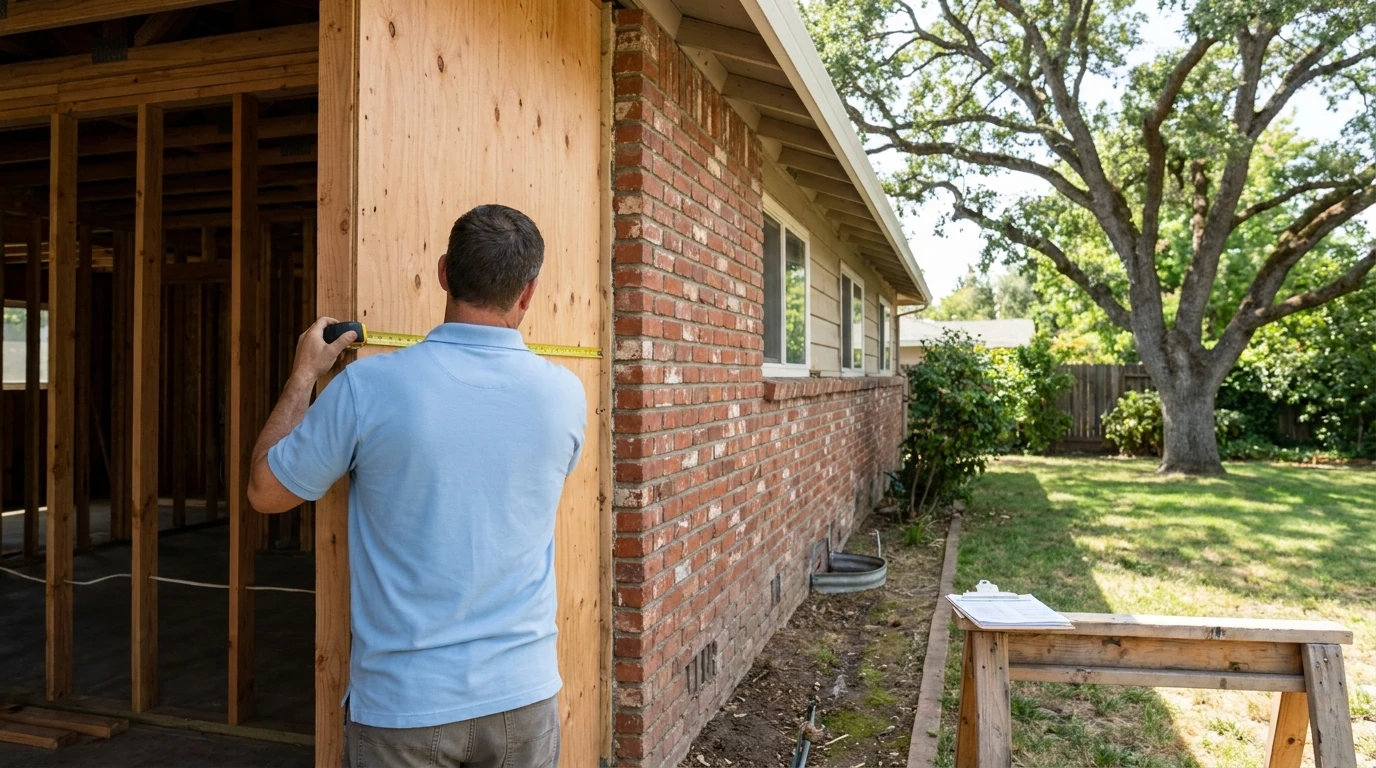
Beyond the license itself, ask how many room additions, as opposed to kitchen or bath remodels, the company has completed in the last two years. Additions are a different animal: they involve foundation work, roofline tie-ins, and matching exterior materials on a house that’s often 50 to 70 years old. A contractor whose portfolio is mostly interior remodels may be perfectly good at that work and still be the wrong fit for a structural addition.
How do permits work for a room addition in Sacramento?
Who pulls your permit, and from which agency, depends on exactly where your property sits: homes inside Sacramento city limits go through the City of Sacramento’s building division, while homes in unincorporated areas like Arden-Arcade or Carmichael go through Sacramento County instead, and the two offices have different submittal requirements and review timelines. Your contractor should know which one applies to your address before they even give you a firm estimate.
A second-story addition or any addition that adds square footage typically triggers plan review against the current building code adopted locally, which follows the International Code Council’s model codes with California amendments. That review checks things like joist spans, egress window sizing in new bedrooms, and whether your existing foundation can carry added load, which is exactly where structural engineering comes in.
For older East Sacramento and Land Park lots on original 1950s foundations, a competent contractor will flag early whether the new load requires foundation reinforcement, because that changes both the cost and the timeline. If a bid doesn’t mention engineering or permitting at all, that’s a bid missing the parts of the job most likely to cause a delay later.
Does the contractor need an in-house structural engineer?
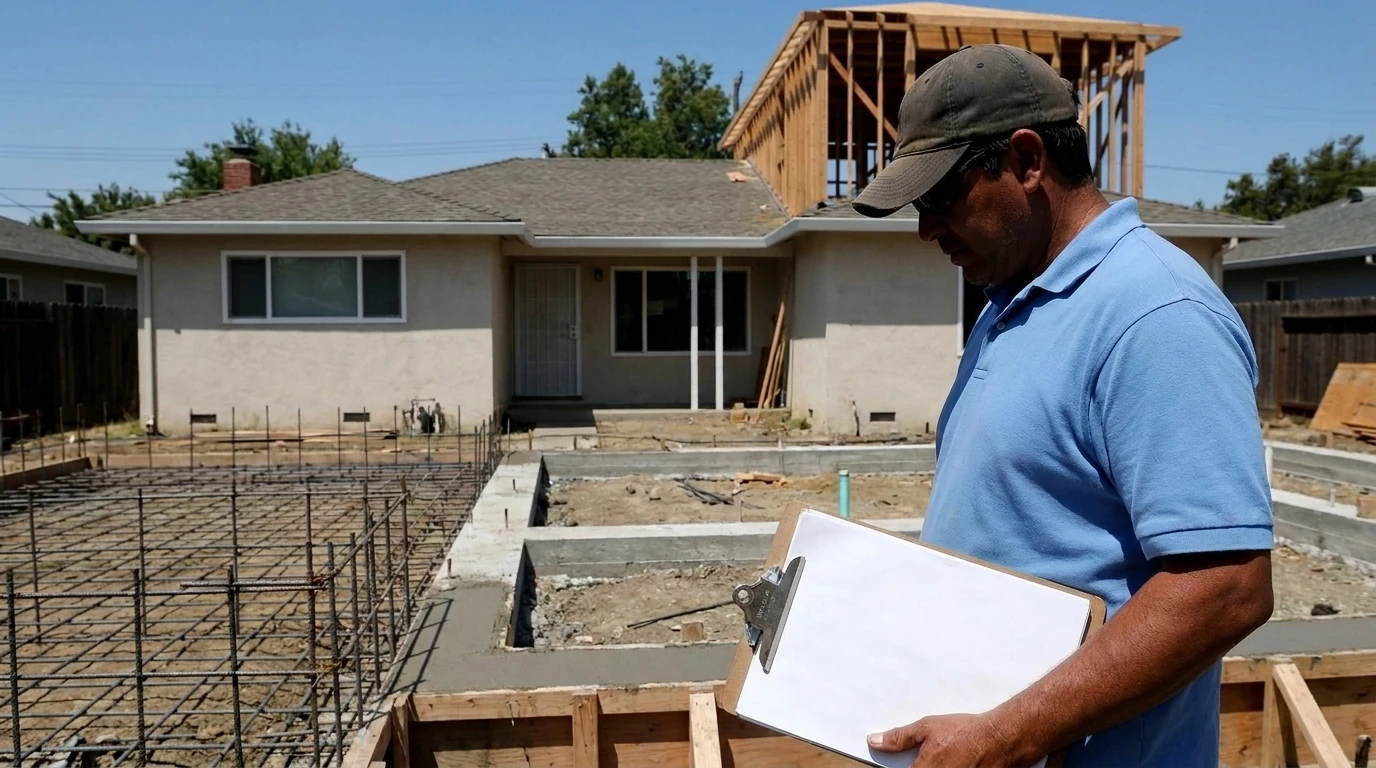
Not every contractor needs a structural engineer on staff, but every addition needs engineered drawings from someone, either in-house or through a regular partner firm, before the permit gets approved. What matters is that the engineering relationship is established and fast, not scrambled together after your bid is already signed.
Ask directly: do you have an engineer you work with regularly, or do you find one project by project? A contractor who already has a working relationship with a local structural engineer can usually turn around stamped drawings in days instead of weeks, because the engineer already understands how that contractor frames and details a tie-in. That speed matters more than it sounds like it would when you’re living through the project.
If your addition involves a second story, the engineering question gets more important, not less. Adding weight above an existing single-story footprint means re-checking the foundation, the existing wall framing, and sometimes the roof structure that’s staying in place. This is also where a contractor’s addition-specific portfolio earns its keep: ask to see photos of a second-story tie-in they’ve actually completed, not just a rendering.
What should be in writing before you sign a contract?
A written scope of work, a payment schedule tied to completed milestones (not a large deposit up front), and a realistic timeline with a stated start date should all be in your contract before you sign, along with the permit numbers once they’re pulled. California law also caps the down payment a contractor can collect on a home improvement contract, so a request for most of the money up front is a red flag worth asking about directly.
Our post on how to choose a general contractor in Sacramento walks through the broader vetting process, including insurance certificates and reference checks, if you want the fuller checklist. For an addition specifically, add one more item: a written allowance for matching existing exterior materials, siding, roofing, brick veneer, because matching a 1960s material to what’s available today is almost never a flat-rate line item, and a vague allowance here is where change orders start piling up.
Once the scope, schedule, and payment terms are all on paper and you’ve confirmed the license is active, you’re in a reasonable position to move forward. If your project is closer to a full teardown-and-rebuild than a tied-in addition, that’s worth a separate conversation, since it shifts into new construction territory with its own permitting path.
TDI Builders handles room additions across the Sacramento area as part of its general contracting work, including the permit coordination and structural tie-in work described above. Request a room addition estimate if you’re ready to get a written scope for your specific lot.
About TDI Builders
TDI Builders has handled commercial, industrial, and residential construction and rebuilding work since 1983, with offices in Sacramento, Manteca, and Modesto covering the greater Sacramento Valley, San Joaquin County, and the Modesto area. The company is Native American owned (Cherokee) and holds a 5.0 average rating from clients on Google. TDI’s crews manage projects from the first estimate through the final walkthrough, including room additions, general contracting, and new home construction, and can be reached for a project consultation at TDI Builders, (877) 688-0866.